Meet the birch tree: peeling bark and woodland regeneration
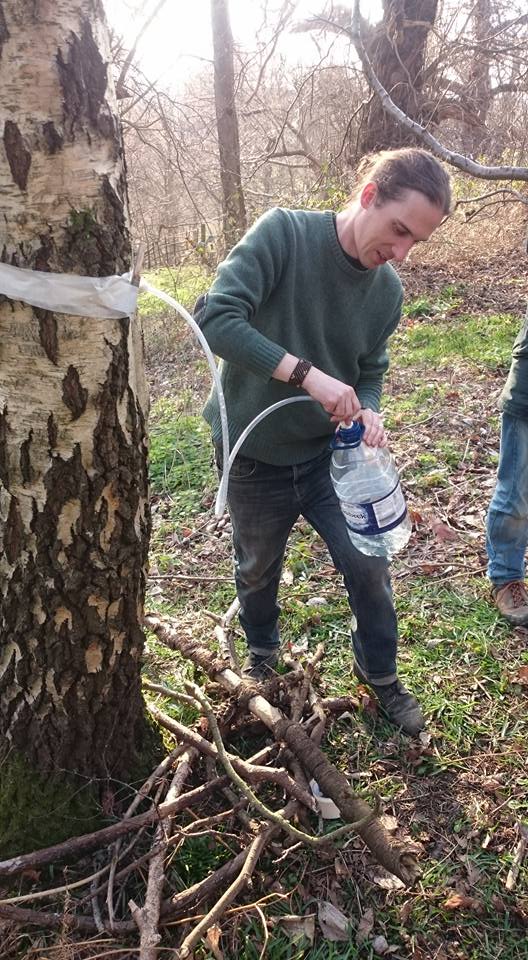
With its silver-white bark and fluttering leaves, the birch tree is often one of the first to catch the eye and one of the first to take root in open ground. Birch is what ecologists call a pioneer species, meaning it thrives in disturbed or open areas where other trees might struggle. It is often among the first to recolonise ground cleared by wind, fire or human activity, paving the way for more complex woodland habitats to develop over time.
At Tortworth Arboretum, both silver birch (Betula pendula) and downy birch (Betula pubescens) grow in different corners of the site. You can tell them apart by their bark and leaf shape, silver birch often has that striking white, peeling bark and more triangular leaves, while downy birch has softer, hairier twigs and prefers wetter ground.
Birch trees are short-lived compared to oaks or beeches, but in their relatively brief lives they play a vital role. Their light, airy canopy lets sunlight through to the woodland floor, encouraging a diversity of ground flora and allowing slower-growing trees to establish beneath. Over time, birch creates the conditions for a richer, more layered woodland ecosystem.
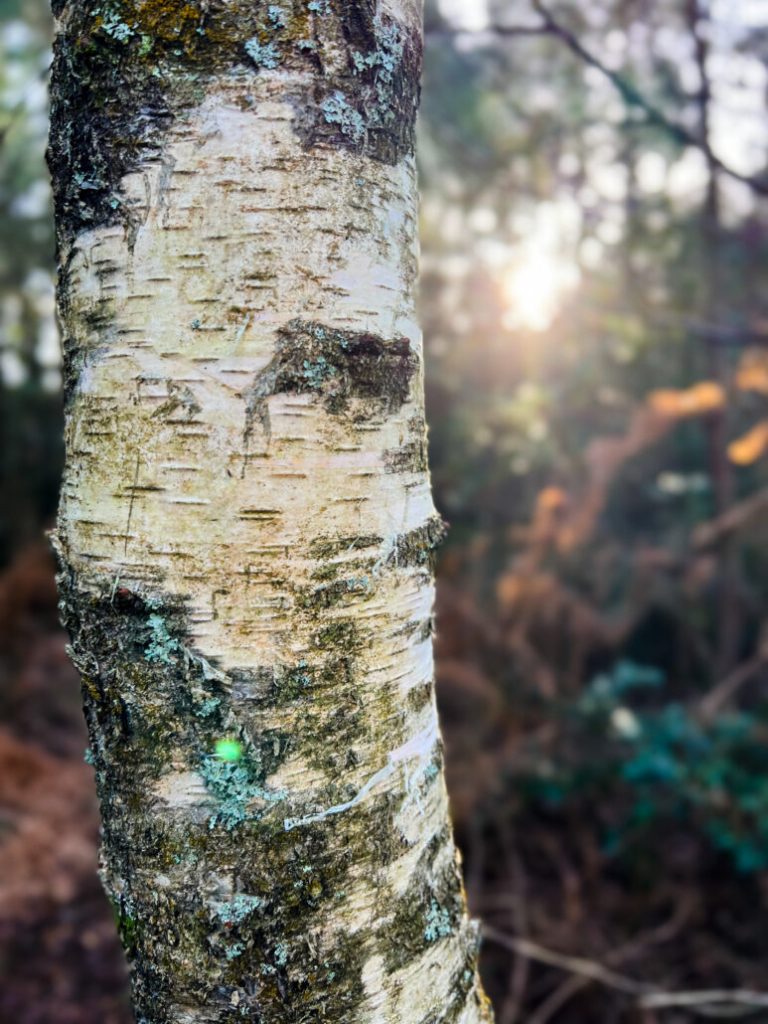
Their bark, which peels naturally in papery strips, is not just beautiful but functional too. It contains natural oils that make it waterproof and slow to rot, which is why it has been used for centuries in fire-lighting, roof coverings and basketry. Even when dead, birch continues to give life, its rotting wood hosts a wide variety of fungi and invertebrates, while its seeds feed birds like siskins and redpolls.
At Tortworth, birch stands as a quiet symbol of renewal. Where ground was once bare or bramble-choked, birch is often the first to arrive, reminding us that nature rarely stands still. It reclaims, repairs and begins again, sometimes with nothing more than a flickering leaf and a strip of peeling bark.